BG

Remixed from 1

Remixes 2
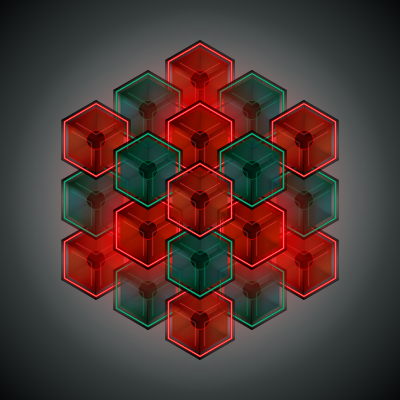
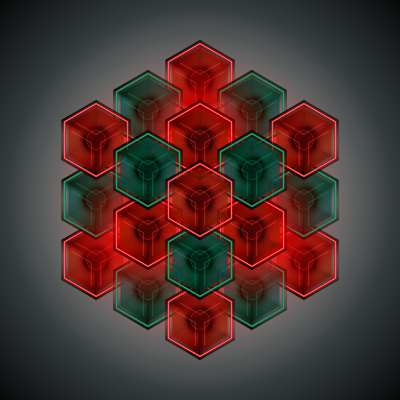
Want to remix this clipart?
- Download the SVG
- Edit it in your favourite SVG editor
- Upload with Upload Remix (links automatically)
Sources
No catalog sources linked yet.
I found this clipart!
Related Finds — Openclipart spotted in the wild. Browse all · Atom
No Finds yet.
Log in to post a Found.
Comments
@Lazur
2022-08-16 01:24:03+00That is so cool on many levels!
How can you pull this off with a so sleek svg? What program do you use to make these?
Or is that all a notepad really?
@jarda
2022-08-16 20:20:06+00@Lazur
I saw animated gif with this cube-split-effect long time ago. I though about that for some time how to do it in SVG way.
I took pencil, sheet of paper and notepad++ and started experimenting with this.
First result was "Rubic cube" uploaded two weeks ago (with thumbnail showing just one small cube).
I was not satisfied with that, so I reworked it a bit and added wooden texture inspired by https://en.wikipedia.org/wiki/SVG_filter_effects
@Lazur
2022-08-17 00:22:11+00@jarda
Saw that, this took it to another level. Saying this because my go to tool is inkscape and adding the animation later in with notepad++.
Inkscape adds alot of additional data and could never deal with animating translate transformations with all the transformation matrices.
Also the wood texture filter is very effective with a short filter chain.
Can't imagine how you proceed to draw without a visual cue only using notepad++.
@SunKing2
2025-10-31 19:51:26+00That's very impressive to pull this off with svg; not just the look (although the textures are great), but to animate an effect of where one 3d-like object is behind another. I'll have to study this before I can get my head around how this is even possible.
@jarda
2025-11-01 22:30:13+00@SunKing2
The trick is in the correct order in which the objects are drawn. The farthest objects are drawn first and are gradually covered by the closer ones. Objects in the foreground must be drawn last.
It is principle of painter's algorithm (https://en.wikipedia.org/wiki/Painter%27s_algorithm)
Log in to comment.